

In 45 B.C., New Year’s Day is celebrated on January 1 for the first time in history as the Julian calendar takes effect.
Soon after becoming Roman dictator, Julius Caesar decided that the traditional Roman calendar was in dire need In designing his new calendar, Caesar enlisted the aid of Sosigenes, an Alexandrian astronomer, who advised him to do away with the lunar cycle entirely and follow the solar year, as did the Egyptians. The year was calculated to be 365 and 1/4 days, and Caesar added 67 days to 46 B.C., making 45 B.C. begin on January 1, rather than in March. He also decreed that every four years a day be added to February, thus theoretically keeping his calendar from falling out of step.

Shortly after Caesar was assassinated in 44 B.C., Mark Anthony changed the name of the month Quintilis to Julius (July) to honor his legacy. Later, the month of Sextilis was renamed Augustus August) after his successor.
Those who strictly adhered to the Julian calendar did not observe the New Year exactly on January 1 in the Middle Ages . The reason for this was that Caesar and Sosigenes failed to calculate the correct value for the solar year as 365.242199 days, not 365.25 days. Thus, an 11-minute-a-year error added seven days by the year 1000, and 10 days by the mid-15th century.
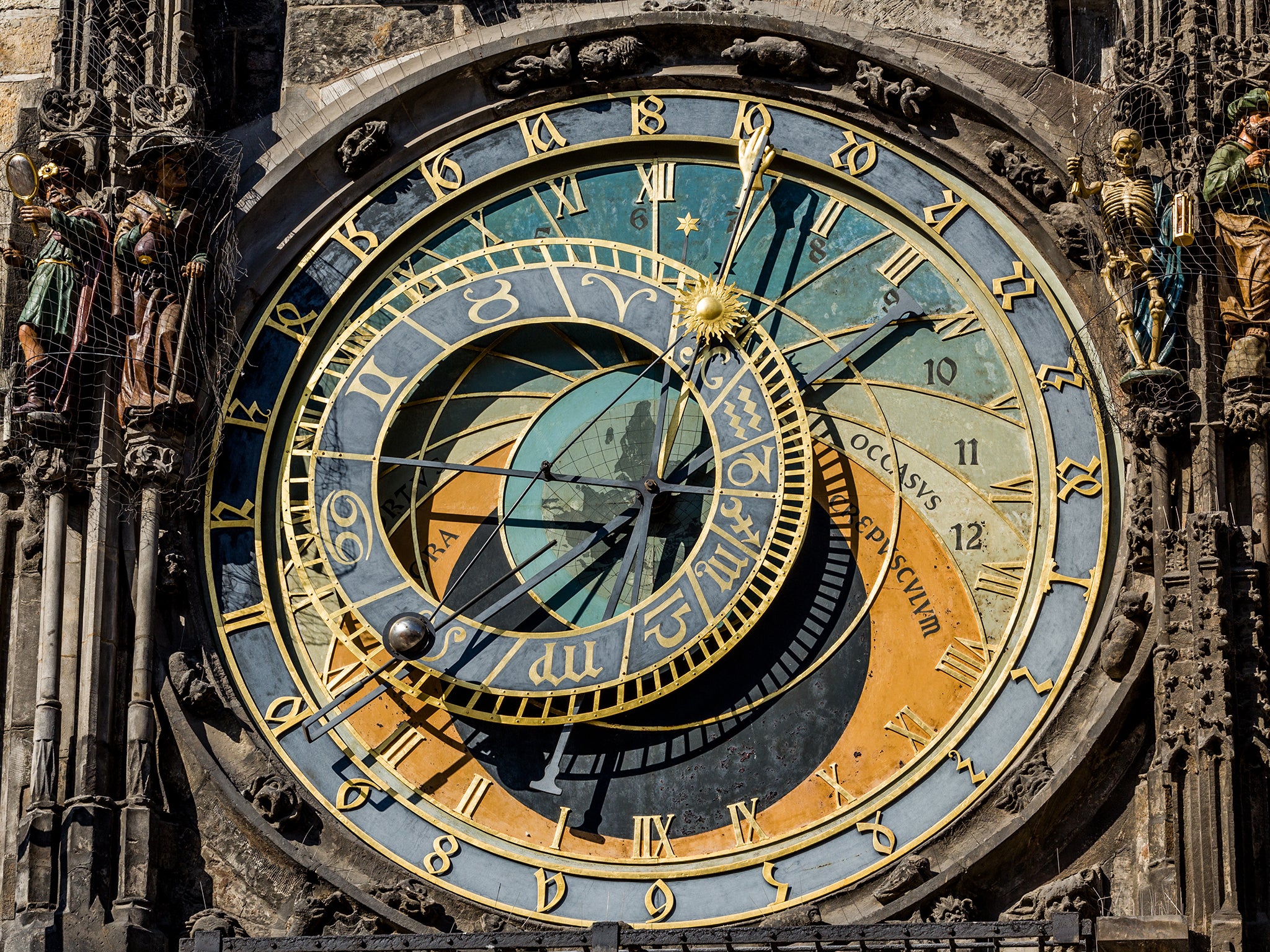
In 1582, the Gregorian calendar was implemented, omitting 10 days for that year and establishing the new rule that only one of every four centennial years should be a leap year. Since then, people around the world have gathered en masse on January 1 to celebrate the precise arrival of the New Year.


